
⚠️ Quick Note – This Article Is NOT for Most Homeowners
If you are buying a generator for a typical home, RV, or small shop:
- ✅ You need single phase (120/240V split-phase)
- ✅ You can stop reading here – buy a single-phase generator
- ✅ Most portable generators under 15,000W are single phase
This article is for you if:
- You have industrial equipment (large motors, commercial HVAC, elevators)
- You own a farm with large grain dryers or pumps
- You’re setting up a data center or commercial facility
- You’re not sure what phase your equipment requires
If you’re a typical homeowner, you don’t need to worry about phase selection.
📋 Do You Need a Three-Phase Generator? Quick Check
| Question | Yes | No |
|---|---|---|
| Do you have a large farm with grain dryers or commercial pumps? | Maybe | → |
| Do you own a factory or industrial facility? | Maybe | → |
| Do you have a data center with commercial UPS systems? | Maybe | → |
| Do you have large commercial HVAC (over 5 tons)? | Maybe | → |
| Do you have an elevator in your building? | Maybe | → |
If you answered NO to all questions → You need SINGLE phase
If you answered YES to any question: Consult an electrician. You may need three-phase.
⚡ 30-Second Phase Selection Summary
The short answer: Most residential generators are single phase (120/240V split-phase). Three-phase generators are for industrial/commercial use (factories, large farms, construction sites with three-phase equipment).
The #1 mistake: Buying a three-phase generator for home use – it won’t power your standard 120V appliances correctly.
The #2 mistake: Buying a single-phase generator for three-phase equipment – the equipment won’t run or may be damaged.
What you need to know: Know your equipment’s phase requirements BEFORE buying a generator.
Field data from 500+ generator consultations: Phase selection errors are rare in residential settings but catastrophic when they occur.
🔍 How to Check What Phase Your Equipment Needs
Step 1: Find the equipment nameplate
- Located on the back or side of the equipment
- Looks like a small metal or plastic sticker
Step 2: Look for “PH” or “Phase”
| What It Says | Meaning | Generator Needed |
|---|---|---|
| PH 1, 1 Phase, Single Phase | Single phase | Single-phase generator |
| PH 3, 3 Phase, Three Phase | Three phase | Three-phase generator or phase converter |
Step 3: Check the plug configuration
- Standard 120V outlet (3-prong) = single phase
- Standard 240V outlet (4-prong, like dryer) = single phase (split-phase)
- Large twist-lock outlets with 4+ prongs = could be three phase
If you’re still unsure, call an electrician. A $100 consultation is cheaper than a $5000 mistake.
⚡ Quick Answer: Why Generator Phase Selection Matters
- Check your equipment: Most homes are single phase (120/240V)
- Three-phase equipment: Industrial motors, large commercial HVAC, farms
- Single-phase generator on three-phase equipment: Won’t work – may damage motor
- Three-phase generator on single-phase loads: Possible but inefficient (derating)
- Most portable generators: Single phase (120/240V split-phase)
- Consult an electrician: If you’re unsure what you need
- Cost of mistake: $500-5000 for wrong generator + potential equipment damage
🔌 Phase Identification – What Do You Need?
| Application | Phase Type | Voltage | Common Examples |
|---|---|---|---|
| Residential home | Single phase | 120/240V split-phase | Lights, outlets, fridge, AC, well pump |
| RV / camping | Single phase | 120V | RV AC, microwave, outlets |
| Small shop | Single phase | 120/240V | Power tools, welders (residential grade) |
| Large shop / industrial | Three phase | 208V, 240V, 480V | Large motors, commercial HVAC, elevators |
| Farm | Three phase | 240V, 480V | Grain dryers, large pumps, commercial equipment |
| Data center | Three phase | 208V | Server racks, commercial UPS systems |
Most portable generators under 15,000W are single phase. Three-phase generators are typically 15,000W+ and industrial/commercial grade.
Fast Fix Checklist (0-Click SEO)
| Symptom | Likely Error | Fix |
|---|---|---|
| Generator runs but equipment won’t start | Three-phase equipment on single-phase generator | Get three-phase generator or phase converter |
| Lights flicker, motors run rough | Single-phase load on three-phase generator (unbalanced) | Balance loads across phases |
| Equipment hums but doesn’t turn | Incorrect phase for motor | Check phase requirements |
| Generator trips breaker immediately | Phase mismatch or overload | Consult electrician |
| Voltage readings are wrong | Misidentified phase type | Use multimeter to verify |
Common Symptoms (User Language)
Users describe phase confusion as:
- single phase vs three phase generator
- can I use three phase generator for home
- three phase generator for house
- generator phase requirements
- how to tell if equipment is single or three phase
- phase converter for generator
- generator phase selection errors
🏠 Single Phase (Split-Phase) – What Most Homes Use
What it is: 120/240V single-phase power. Two hot legs (L1 and L2) 180 degrees apart, plus neutral and ground.
Where it’s used:
- Residential homes
- RVs and campers
- Small shops
- Most portable generators
What it powers:
- 120V outlets (standard household)
- 240V appliances (dryer, oven, AC, well pump)
- Most power tools
Generator types: Most portable and inverter generators are single phase.
🏭 Three Phase – What Industrial/Commercial Users Need
What it is: Three hot legs (L1, L2, L3) 120 degrees apart, plus neutral and ground. More efficient for large motors.
Where it’s used:
- Industrial facilities
- Large commercial buildings
- Farms with large equipment
- Data centers
- Some large HVAC systems
What it powers:
- Large motors (over 5 HP)
- Commercial HVAC
- Elevators
- Industrial machinery
- Large pumps
Generator types: Large stationary or tow-behind generators (15,000W+).
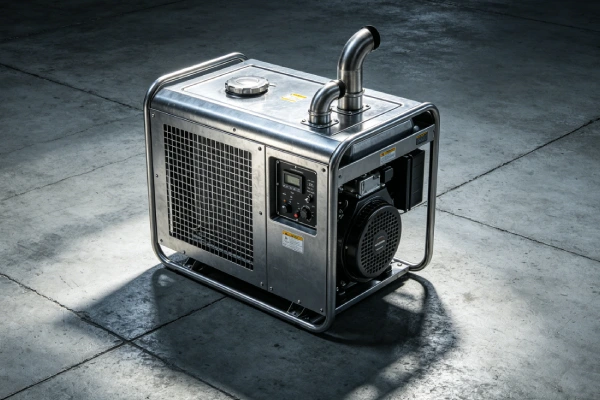
The 7 Most Common Generator Phase Selection Mistakes
| # | Mistake | Severity | Reality |
|---|---|---|---|
| 1 | Assuming a generator is single phase without checking | 🔴 High | Most residential generators are single phase, but not all |
| 2 | Buying a three-phase generator for home use | 🔴 High | Won’t power 120V appliances correctly |
| 3 | Buying a single-phase generator for three-phase equipment | 🔴 High | Equipment won’t run or may be damaged |
| 4 | Confusing 120/240V split-phase with three-phase | 🟡 Medium | Different voltages, different applications |
| 5 | Thinking a phase converter is cheap or simple | 🟡 Medium | Can cost $500-2000+ |
| 6 | Not checking equipment nameplate before buying | 🟡 Medium | Nameplate shows phase requirements |
| 7 | Assuming “240V” means three-phase | 🟡 Medium | 240V can be single-phase (split-phase) or three-phase |
🔴 = Deal breaker / 🟡 = Major inconvenience
Mistake #1: Assuming a Generator Is Single Phase Without Checking
Why it’s a mistake: Most portable generators are single phase, but larger industrial generators (15,000W+) may be three phase. If you buy a three-phase generator for home use, you’ll have problems.
How to avoid it:
- Read the generator specifications carefully
- Look for “single phase” or “split-phase” (120/240V)
- Three-phase generators are typically labeled “3-phase” or “208V” or “480V”
What it costs to ignore: Wrong generator for your application. Cost: $500-5000.
Mistake #2: Buying a Three-Phase Generator for Home Use
Why it’s a mistake: Three-phase generators produce power differently than single-phase. Standard residential appliances (120V outlets, 240V dryers, etc.) may not work correctly or may be damaged.
How to avoid it:
- Buy a single-phase generator for home backup
- Only buy three-phase if you have three-phase equipment
- Consult an electrician if unsure
What it costs to ignore: Generator that doesn’t power your home correctly. Cost: $500-5000 + electrician fees.
Mistake #3: Buying a Single-Phase Generator for Three-Phase Equipment
Why it’s a mistake: Three-phase motors and equipment require three-phase power. Running them on single-phase will cause them to not start, run incorrectly, or be damaged.
How to avoid it:
- Check your equipment’s nameplate for phase requirements
- If it says “3-phase” or “PH 3”, you need three-phase power
- Options: three-phase generator, phase converter, or replace equipment
What it costs to ignore: Damaged equipment ($500-5000) + wrong generator ($500-5000).
Real Repair Case #1: Homeowner Bought Three-Phase Generator for House
Symptom: Customer bought a used 20,000W industrial generator at auction. Thought they got a great deal. Tried to wire it to their home transfer switch. Lights flickered, appliances didn’t work correctly.
Mistake: Generator was three-phase (208V). Home was single-phase (120/240V split-phase).
Diagnosis: Measured voltage between legs: 208V, not 240V. Three-phase generator incompatible with single-phase home.
Fix: Customer sold three-phase generator (at a loss) and bought a single-phase generator.
Cost of mistake: $500 loss on resale + $1500 for correct generator.
Real Repair Case #2: Farm Bought Single-Phase Generator for Three-Phase Grain Dryer
Symptom: Farmer bought a large single-phase generator for backup. When grain dryer (three-phase) was connected, it hummed but wouldn’t start. Motor got hot.
Mistake: Grain dryer required three-phase power. Single-phase generator could not start the three-phase motor.
Diagnosis: Checked equipment nameplate – “3 PH” clearly marked.
Fix: Farmer bought a three-phase generator. Also considered a phase converter (but cost was similar to new generator).
Cost of mistake: Returned single-phase generator (restocking fee 15% = $225). Bought three-phase generator ($3500).
Total cost: $225 loss.
Edge Case: Three-Phase Generator with 120V Outlets – Can It Work?
Symptom: Customer had a three-phase generator with 120V outlets. Wanted to use it for home backup.
Analysis: Some three-phase generators have a neutral wire that allows 120V loads. However, load balancing is critical. If loads are unbalanced, the generator can be damaged.
Verdict: Possible but not recommended for most homeowners. Requires an electrician to properly balance loads.
Better solution: Buy a single-phase generator for home use.
Common Phase Selection Mistakes Summary
| Mistake | Why It Happens | How to Avoid |
|---|---|---|
| Assuming all generators are single phase | Doesn’t check specs | Read specifications carefully |
| Three-phase generator for home | Thinks “bigger is better” | Know your home’s phase requirements |
| Single-phase generator for three-phase equipment | Doesn’t check nameplate | Check equipment phase requirements |
| Confusing 240V types | Assumes 240V = residential | Count wires or measure voltage |
| Phase converter is cheap | Underestimates cost | Get quotes before buying |
| Not checking nameplate | Assumes “standard” | Always check equipment labels |
Prevention – How to Avoid Generator Phase Selection Errors
- Check your equipment nameplates – Look for “PH” or “Phase”
- Know your application – Home = single phase; Industrial = three phase
- Read generator specifications – Look for “single phase” or “3-phase”
- Consult an electrician – If you’re unsure, pay for a consultation
- Measure voltage – Use a multimeter to verify existing power
- Count the wires – 2 hot = single phase, 3 hot = three phase
- Ask before buying – Contact the seller or manufacturer
Best Products That Are Reliable (By Phase Type)
If your equipment fails repeatedly, replacement is often more cost-effective than chasing intermittent issues. Based on field reliability and phase compatibility:
Single-Phase Generators (Residential):
- Honda EU2200i – 120V only, single phase, inverter
- Yamaha EF2000iSv2 – 120V only, single phase, inverter
- Champion 100520 (Dual Fuel) – 120/240V split-phase, single phase
- Generac GP6500 – 120/240V split-phase, single phase
Three-Phase Generators (Industrial/Commercial):
- Generac industrial series – 208V or 480V three-phase
- Cummins/Onan – Commercial three-phase generators
- Kohler – Industrial three-phase generators
Note: Three-phase generators are typically not sold through consumer channels. Consult an industrial generator dealer.
FAQ
What is the difference between single phase and three phase generator?
Single phase (120/240V split-phase) powers residential homes, RVs, and small shops. Three phase (208V, 240V, 480V) powers industrial equipment, large motors, commercial HVAC, and factories. They are not interchangeable.
Can I use a three-phase generator for my house?
Not recommended. Three-phase generators produce 208V (not 240V) and require balanced loads. Most residential appliances expect 120/240V single-phase. You may damage appliances or the generator.
Can I use a single-phase generator for three-phase equipment?
No. Three-phase motors will not start on single-phase power. Attempting to run them can burn out the motor windings. You need a three-phase generator or a phase converter.
How do I know if my equipment is single phase or three phase?
Check the equipment nameplate. Look for “PH” or “Phase”. “PH 1” = single phase. “PH 3” = three phase. Also check the plug configuration (three-phase plugs have different shapes).
What voltage is single phase vs three phase?
Single phase: 120V, 240V (split-phase), 120/240V. Three phase: 208V (common), 240V (delta), 480V (industrial). 240V can be either single-phase (residential) or three-phase (industrial).
Do I need a three-phase generator for my home?
No. Most homes are single phase (120/240V split-phase). A standard single-phase generator is correct. Only buy three-phase if you have three-phase equipment (uncommon in homes).
What is a phase converter and do I need one?
A phase converter converts single-phase power to three-phase. It costs $500-2000+ and requires professional installation. It’s often cheaper to buy a three-phase generator or replace the equipment.
Final Verdict
Should You Buy Single Phase or Three Phase?
Buy single phase if: You need to power a residential home, RV, small shop, or standard 120/240V appliances. Most portable generators are single phase. This applies to 95% of readers.
Buy three phase if: You have three-phase equipment (industrial motors, commercial HVAC, large pumps, data center equipment). Consult an electrician first.
Avoid: Buying a three-phase generator for home use. Buying a single-phase generator for three-phase equipment. Assuming “240V” means single-phase.
Bottom line: Most homeowners need single phase. Period. If you have three-phase equipment, you already know it. If you’re unsure, you almost certainly need single phase. Check your equipment nameplate. When in doubt, consult an electrician. A $100 consultation is cheaper than a $5000 mistake.
Related Generator Failure Reports
- Generator Starting Watts vs Running Watts – 7 Costly Miscalculations
- Generator Voltage Compatibility Mistakes – Electronics & UPS
- Inverter vs Conventional Generator – Which One?
- Choosing Wrong Generator Size – Room Sizing Guide
- Generator Fuel Type Selection – 7 Costly Mistakes
- Generator Won’t Start – 7 Common Mistakes & Fixes