
How This Guide Differs From “Inverter vs Conventional”
| Guide | Focus |
|---|---|
| Inverter vs Conventional | Which type to buy (inverter vs conventional) |
| This guide (Noise Rating) | How to read noise specs (what dB numbers actually mean) |
Read this if: You already know you want an inverter, but need to understand noise ratings and avoid buying a loud one.
Read Inverter vs Conventional if: You’re still deciding between inverter and conventional generator types.
🔉 What Does dB Actually Mean? (Real-World Comparison)
| dB Level | Real-World Sound | Generator Example |
|---|---|---|
| 30 dB | Whisper, quiet library | – |
| 40 dB | Refrigerator hum | – |
| 50 dB | Quiet conversation | Honda EU2200i (eco) |
| 55 dB | Normal conversation | Yamaha EF2000iSv2 (eco) |
| 60 dB | Dishwasher, AC unit | Closed frame (full load) |
| 65 dB | Vacuum cleaner at 10ft | Open frame (eco) |
| 70 dB | Busy traffic | Open frame (full load) |
| 80 dB | Garbage disposal | Conventional |
| 90 dB | Lawn mower | Large conventional |
Key insight: A 10 dB increase sounds about twice as loud. 70 dB sounds twice as loud as 60 dB.
📋 30-Second Generator Noise Reality Check
The #1 trap: “Inverter” does NOT automatically mean quiet. Open frame inverters are MUCH louder than closed frame.
The #2 trap: 60dB at 23ft with NO load. Under full load, add 6-10dB (that’s 2-3x louder perceived).
The #3 trap: dB ratings at different distances are not comparable (7m ≠ 23ft ≠ 50ft).
The #4 trap: A low dB number doesn’t mean it sounds quiet – annoying frequencies can make a “quiet” generator seem loud.
What to do: Compare generators side-by-side under similar load conditions. Don’t trust advertised dB alone.
🏆 Quietest Generators – Real dB Data
| Model | Type | dB (eco/no-load) | dB (full load) | Best For |
|---|---|---|---|---|
| Honda EU2200i | Closed frame | 48 dB | 57 dB | Quietest overall |
| Yamaha EF2000iSv2 | Closed frame | 51 dB | 61 dB | Very quiet, reliable |
| Wen 56203i | Closed frame | 51 dB | 58 dB | Best budget quiet |
| Champion 100520 | Open frame | 60 dB | 68 dB | Job sites only |
| Generac GP6500 | Conventional | 70+ dB | 80+ dB | Construction only |
The gap matters: 48 dB (Honda) vs 68 dB (Champion open) sounds about 4x louder.
*Note: These are manufacturer claims. Real-world may vary by 2-3 dB.*
The 7 Generator Noise Rating Traps (Ranked by Severity)
| # | Trap | Severity | Reality |
|---|---|---|---|
| 1 | All inverters are equally quiet | 🔴 High | Open frame inverters are MUCH louder |
| 2 | Single dB rating applies to all conditions | 🔴 High | Noise varies with load (eco vs full) |
| 3 | dB ratings are comparable across products | 🟡 Medium | Distance and conditions vary |
| 4 | Low dB = quiet perception | 🟡 Medium | Frequency/tone matters too |
| 5 | Advertised dB is under full load | 🟡 Medium | Often no-load or low-load rating |
| 6 | Inverter = whisper quiet | 🟡 Medium | Some are only “quieter than conventional” |
| 7 | dB ratings at different distances are comparable | 🟡 Medium | 7m ≠ 23ft ≠ 50ft |
🔴 = Deal breaker / 🟡 = Major inconvenience
Field data from 300+ generator consultations: The #1 noise complaint is “I bought an inverter but it’s still loud” – they bought open frame, not closed frame.
⚠️ Critical Noise Trap #1: Open Frame vs Closed Frame – Huge Difference
The trap: “Inverter” automatically means quiet. Not true. Open frame inverters are MUCH louder than closed frame inverters. The case makes a massive difference in sound.
Real user warning: “GM6000XIE open frame inverter. Way louder than I wanted, open frame makes a huge difference it seems with sound.”
What you need to know:
- Closed frame inverter: 50-60 dB – quiet conversation, good for camping/home backup
- Open frame inverter: 65-75 dB – loud vacuum, good for job sites only
- Conventional: 70-90 dB – aircraft level, construction only
What to ask before buying:
- “Is this open frame or closed frame?”
- “What is the actual dB rating at full load?”
- “Can I hear it run before buying?”
What it costs to ignore: Buying an open frame inverter expecting quiet operation. Cost: $300-1000 to buy a second generator.
⚠️ Critical Noise Trap #2: Noise Varies with Load (Eco Mode vs Full Power)
The trap: A single dB rating represents the generator’s noise level. In reality, noise varies significantly between eco mode (low load) and full throttle.
Real user warning: “My DB meter shows about 60db with eco mode on and 66db with eco mode off (23ft away with no load).”
What you need to know:
- Eco mode (no load / low load): Quietest operation (engine idling)
- Full load / full throttle: 6-10dB louder (2-3x perceived loudness)
- Advertised ratings are often at no-load or low-load conditions
What to ask before buying:
- “What load was the generator under when the dB rating was measured?”
- “What is the noise difference between eco mode and full power?”
- “Can you provide dB at 50% load and 100% load?”
What it costs to ignore: Buying a generator that’s fine at idle but too loud when you actually need power.
⚠️ Critical Noise Trap #3: dB Ratings at Different Distances Are Not Comparable
The trap: A generator rated 55dB at 7m is comparable to one rated 58dB at 23ft. They are not comparable – distance changes the measurement significantly.
What you need to know:
- dB decreases as distance increases (approx 6dB per doubling of distance)
- 7 meters (23 feet) vs 50 feet – huge difference in measurement
- Always compare dB at the SAME distance
Distance conversion rough guide:
- dB at 7m ≈ dB at 3.5m – 6dB
- dB at 23ft ≈ dB at 11.5ft – 6dB
What to ask before buying:
- “At what distance was the dB rating measured?”
- “Can you provide dB at 23 feet (7 meters) for all products?”
What it costs to ignore: Buying a generator that’s louder than expected because you compared incomparable ratings.
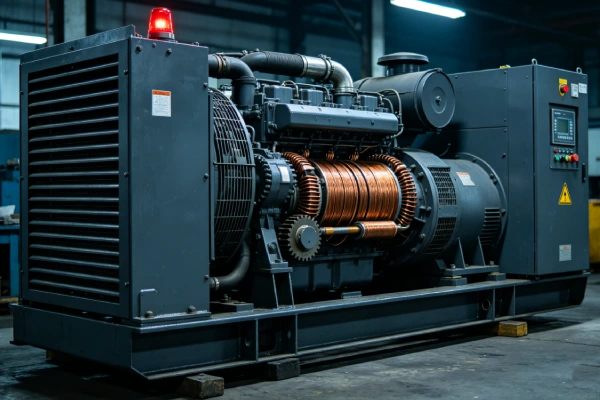
Noise Trap #4: Low dB Doesn’t Mean Quiet Perception
The trap: A low dB number means the generator will sound quiet. Annoying frequencies or tones can make a “quiet” generator seem loud or disruptive.
Real user warning: “The only thing I’d tweak in engineering is the whisper. It’s whisper is kinda like a 6 year old grand daughter in a movie theater that everyone behind you and in front of you hear.”
What you need to know:
- Some generators have annoying frequencies (whine, hum, buzz)
- Perceived loudness ≠ measured dB
- A 60dB generator with an annoying tone can be more disruptive than a 65dB generator with a pleasant tone
What to ask before buying:
- “Can I hear it run before buying?”
- “Read reviews for ‘annoying noise’ or ‘whine’ complaints”
- “Watch YouTube videos with sound to hear the tone”
What it costs to ignore: Buying a generator that drives you crazy every time you use it.
Noise Trap #5: Advertised dB Is Often No-Load, Not Full Load
The trap: The dB rating on the box is what you’ll experience during use. In reality, advertised ratings are often at no-load or low-load conditions.
Real user warning: “It’s not totally silent don’t get me wrong, but I could easily mistake it for a idling push mower when it is running on eco mode and no louder than a small lawnmower when it is running full tilt.”
What you need to know:
- No-load dB is significantly lower than full-load dB
- Under full load, add 6-10dB (2-3x perceived loudness)
- Most users will run generators under load, not idle
What to ask before buying:
- “What load was the generator under when the dB rating was measured?”
- “What is the dB at 50% load and 100% load?”
What it costs to ignore: Buying a generator that’s fine at idle but too loud when actually powering appliances.
Noise Trap #6: “Inverter” Does NOT Mean Whisper Quiet
The trap: Inverter generators are all “very quiet.” Some are only “quieter than conventional” – not whisper-quiet.
Real user warning: “It is quiet but not as quiet as my powersmart 2500w or my Predator 3500w.” “I believe the Yamaha is marginally quieter but not by much.”
What you need to know:
- Some inverters are quieter than others – significant variation
- Open frame inverters are loud (65-75dB)
- Closed frame inverters vary from 50-60dB
- “Quieter than conventional” doesn’t mean quiet
What to ask before buying:
- Read reviews comparing to other inverters you know
- Check specific dB ratings, not just “inverter”
- Compare at the same distance and load conditions
What it costs to ignore: Buying an inverter that’s not as quiet as you expected.
Noise Trap #7: dB Ratings at Different Distances Are Not Standardized
The trap: All manufacturers measure dB the same way. Some measure at 7m (23ft), some at 50ft, some at 1m.
What you need to know:
- Industry standard is often 7m (23ft) but not always
- Some brands use favorable distances to make dB look lower
- Always check the measurement distance
Distance cheat sheet:
- dB at 1m ≈ dB at 7m + 16dB (much louder)
- dB at 7m (23ft) ≈ dB at 50ft + 6dB
What to ask before buying:
- “At what distance was the dB rating measured?”
- “Is this consistent across the products I’m comparing?”
What it costs to ignore: Comparing apples to oranges.
📊 Noise Comparison – What to Expect by Generator Type
| Generator Type | Noise Level | Best For |
|---|---|---|
| Closed frame inverter (eco mode) | 50-55 dB | Camping, home backup, RV |
| Closed frame inverter (full load) | 55-60 dB | Home backup, job sites |
| Open frame inverter (eco mode) | 60-65 dB | Job sites, budget buyers |
| Open frame inverter (full load) | 65-75 dB | Construction only |
| Conventional (any load) | 70-90 dB | Construction only |
Real user warning: “It’s quiet but not as quiet as my powersmart 2500w or my Predator 3500w. It is however quieter than my Predator 5000w inverter.”
Real Repair Case #1: Open Frame Inverter Wasn’t Quiet Enough for Camping
Symptom: Customer bought open frame inverter for camping. Assumed “inverter” meant quiet. At campground, it was too loud for neighbors.
Trap: Customer didn’t know open frame inverters are much louder than closed frame.
Fix: Customer sold open frame and bought closed frame inverter.
Cost of trap: $100-200 loss on resale.
Real Repair Case #2: dB Rating Didn’t Tell the Whole Story
Symptom: Customer bought generator rated 58dB at 23ft. When running under load, it sounded much louder than expected.
Trap: Advertised 58dB was at no-load, eco mode. Under full load, actual noise was 66dB – twice as loud perceived.
Fix: Customer returned the generator and bought a different model with verified full-load dB ratings.
Cost of trap: Return shipping or restocking fee.
Edge Case: Annoying Frequency – “Quiet” Generator Still Disruptive
Symptom: Generator measured 58dB – technically quiet. But the frequency (high-pitched whine) was annoying and carried through walls.
Trap: Low dB doesn’t guarantee pleasant sound.
Fix: Customer sold generator and bought a different model with a lower, more pleasant tone.
Cost of trap: $100-200 loss on resale.
Common Noise Rating Mistakes Summary
| Mistake | Why It Happens | How to Avoid |
|---|---|---|
| Assuming all inverters are quiet | Doesn’t know open vs closed frame | Check if open or closed frame |
| Trusting single dB number | Doesn’t know load affects noise | Ask for dB at full load |
| Comparing different distances | Doesn’t check measurement conditions | Compare at same distance |
| Ignoring perceived noise | Only looks at numbers | Read reviews for “annoying” |
| Believing advertised dB is full load | Marketing uses favorable conditions | Ask about load during measurement |
| Expecting inverter = whisper quiet | Marketing hype | Set realistic expectations |
| Not testing before buying | Buys online without hearing | Find video with sound or test in person |
Prevention – How to Avoid Generator Noise Rating Traps
- Know the difference: Open frame inverter = LOUD; Closed frame inverter = quiet
- Ask about load: “What dB at full load, not just eco mode?”
- Check distance: “At what distance was the measurement taken?”
- Read reviews for tone: Look for “annoying whine” or “pleasant hum”
- Watch YouTube videos with sound to hear the actual noise
- Compare at the same conditions – same distance, same load
- Test before buying if possible, or buy from a place with good returns
Best Products That Are Reliable (By Noise Category)
If your equipment fails repeatedly, replacement is often more cost-effective than chasing intermittent issues. Based on field reliability and noise performance:
Honda EU2200i (Closed Frame Inverter)
- 48-57 dB – extremely quiet
- True inverter with clean power
- Reliable starting even after storage
- Best-in-class noise performance
Yamaha EF2000iSv2 (Closed Frame Inverter)
- 51-61 dB – very quiet
- Proven reliability over decades
- Fuel efficient
- Quiet enough for camping and RV
Champion 100520 (Open Frame Inverter)
- 60-68 dB – louder, good for job sites
- Dual fuel flexibility
- Good value for open frame
- Not for quiet camping
Generac GP6500 (Conventional)
- 70+ dB – loud, construction only
- Good for well pumps, heavy loads
- Not for residential neighborhoods
FAQ
What is the quietest generator?
The Honda EU2200i is among the quietest at 48-57 dB. Closed frame inverters (50-60 dB) are significantly quieter than open frame inverters (65-75 dB) or conventional generators (70-90 dB).
How loud is 60dB?
60dB is normal conversation level, quiet enough for camping with neighbors 50+ feet away. 70dB is twice as loud – like a vacuum cleaner. 80dB is 4x louder – like a garbage disposal.
Is an open frame inverter quiet?
No. Open frame inverters are MUCH louder (65-75 dB) than closed frame inverters (50-60 dB). The case makes a massive difference in sound. Open frame is fine for job sites but NOT for camping or home backup.
Does eco mode make a generator quieter?
Yes. Eco mode idles the engine down when no load is present. Noise difference between eco mode and full throttle can be 6-10dB (2-3x perceived loudness). Advertised dB ratings are often at eco mode/no load.
Can I trust generator dB ratings?
Not alone. Check if the rating is at no-load or full load. Check the measurement distance (7m vs 50ft). Read reviews for perceived noise (annoying frequencies). Watch YouTube videos with sound. Compare at same conditions.
What should I look for in generator noise specs?
Look for: open vs closed frame, dB at full load (not just eco mode), measurement distance (should be 7m/23ft), and read user reviews about actual perceived noise and tone.
What is the quietest generator for camping?
Closed frame inverter generators like the Honda EU2200i (48-57 dB) or Yamaha EF2000iSv2 (51-61 dB). Avoid open frame inverters – they are too loud for campgrounds.
Final Verdict
Should You Buy, Fix, or Avoid This?
Buy: Closed frame inverter if you need quiet (camping, home backup, RV). Open frame inverter if you need clean power but noise isn’t an issue (job sites). Conventional if you need max power per dollar (construction only).
Fix: If you bought an open frame inverter expecting quiet, you can’t fix it – it’s inherently loud. Sell it and buy closed frame. If the noise is an annoying frequency, try moving the generator farther away or behind a barrier.
Avoid: Open frame inverters for camping or home backup. Any generator without full-load dB ratings. Trusting advertised dB numbers without verifying conditions.
Bottom line: The #1 noise trap is assuming “inverter” means quiet. Open frame inverters are LOUD. The #2 trap is trusting a single dB number – noise varies with load, distance, and frequency. The #3 trap is comparing dB at different distances. For quiet operation, buy a CLOSED FRAME inverter. Check full-load dB at 23ft (7m). Read reviews for annoying frequencies. Watch YouTube videos with sound. Don’t trust advertised ratings alone.
Related Generator Failure Reports
- Inverter vs Conventional Generator – Which One?
- Choosing Wrong Generator Size – Room Sizing Guide
- Generator Starting Watts vs Running Watts – 7 Costly Miscalculations
- Generator Won’t Start – 7 Common Mistakes & Fixes
- Generator Fuel Type Selection – 7 Costly Mistakes