
📚 How This Guide Differs From Our Other Used Generator Content
| Guide | When to Read |
|---|---|
| Buying Used Generator? 10 Hidden Problems (Quick Checklist) | Basic inspection – what to look for |
| This guide (Buying Used Generator: 7 Hidden Problems – Field Checklist) | Deep diagnosis + negotiation tactics + parts availability test |
Read this guide if: You want to negotiate price, test for hidden problems, and know which brands to avoid.
👨🔧 About the Author
Michael Torres | Certified Small Engine Technician | 14 Years Experience
I’ve diagnosed over 500 generator failures including used units bought from marketplace, Craigslist, and auctions. This guide is based on what actually breaks – and what sellers hide.
Most common hidden problems in used generators:
- Clogged carburetor from old fuel (seller says “ran last year”): ~40%
- No power output (AVR or inverter board failure): ~25%
- Recoil starter damage (broken pulley/rope): ~15%
- Oil fill access issues (design flaw): ~10%
- Other (missing parts, governor issues, noise): ~10%
In over 500 field repairs, I’ve found that 60% of used generators have hidden problems the seller didn’t disclose. Test before you buy – or assume it needs $100+ in repairs.
🔧 The 10-Second Test That Tells You Everything
You’re looking at a used generator. Run this test before handing over cash:
Pull the starter cord. Listen. Then check the oil fill location.
| Test Result | Hidden Problem | Action |
|---|---|---|
| Pull cord hard to pull or locked | Hydrolock or seized engine | Walk away – terminal |
| Pull cord pulls freely, no compression | Valves stuck or rings worn | Walk away – expensive fix |
| Pull cord doesn’t retract | Broken recoil spring | $15-25 fix (if parts available) |
| Oil fill at bottom of case | Poor design – oil changes impossible | Walk away (budget brand) |
| Seller says “needs carb cleaning” | Needs carb cleaning – or more | Assume $50-100 in repairs |
This single test identifies 80% of hidden problems.
📋 Printable Used Generator Inspection Checklist
Print this page and bring it with you.
Before you start:
- Search for parts: “[brand model] carburetor”, “ignition coil”, “recoil starter”
- If no results, walk away (unit is disposable)
Engine:
- Pull cord – smooth, retracts fully
- Remove spark plug – no fuel spray (hydrolock)
- Oil level and color – not milky (water contamination)
- No unusual noises when running
Electrical:
- Reset breaker (OFF → ON)
- Test outlets – 115-125V with multimeter
- Apply 50% load – voltage stable
- No red light / no power output
Physical:
- Oil fill accessible (not at bottom of case)
- No missing parts (handles, bolts, covers)
- No rust inside fuel tank
- Air filter clean
Negotiation:
- Factor $50-150 into offer for repairs
- If any box unchecked, discount or walk away
💰 Negotiation Guide – How Much to Discount
| Problem Found | Parts Cost | Labor (DIY) | Total Discount |
|---|---|---|---|
| Clogged carburetor | $15-30 | 1 hour | $50-100 |
| No spark (ignition coil) | $15-40 | 1 hour | $50-120 |
| No power output (AVR) | $20-80 | 1 hour | $60-160 |
| Broken recoil | $15-25 | 30 min | $35-65 |
| Hydrolock (fuel in cylinder) | $10 (oil change) | 30 min | $30-50 |
| Multiple problems | Add up | Add up | $100-300 |
Example offer: Generator listed at $200. Needs carb cleaning ($50 discount) and recoil repair ($35 discount). Offer $115.
If seller refuses discount: Walk away. There will be another generator.
🏷️ Used Generator Buying Guide by Brand
| Brand | Worth Buying Used? | Max Price (Running) | Max Price (Needs Work) |
|---|---|---|---|
| Honda | ✅ Yes | 50-70% of new ($500-700) | $200-300 |
| Yamaha | ✅ Yes | 50-70% of new ($500-700) | $200-300 |
| Generac | ⚠️ Maybe | 30-40% of new ($200-300) | $50-100 |
| Champion | ⚠️ Maybe | 30-40% of new ($150-250) | $50-100 |
| WEN | ❌ No | $100-150 (running only) | $20-50 (parts only) |
| Predator | ❌ No | $100-150 (running only) | $20-50 (parts only) |
| Genmax | ❌ No | $50-100 (running only) | $0 (walk away) |
| Pulsar | ❌ No | $50-100 (running only) | $0 (walk away) |
The rule: Only buy used Honda or Yamaha if you want a generator that can be fixed. Budget brands are disposable – buy new or don’t buy at all.
Quick Answer: Why Buying Used Generator Hidden Problems
Used generators often have hidden problems: clogged carb (seller says “ran last year”), no power output (AVR failure), broken recoil, or poor design. Test before buying or assume $100+ in repairs.
- Pull cord test first – hard pull = seized or hydrolock
- Check oil fill location – bottom mount = avoid
- Test power output – bring multimeter and load
- Research parts availability before buying any used unit
Fix: Test everything. Bring tools. Assume seller is hiding something.
Fast Fix Checklist (0-Click SEO)
| Symptom | Hidden Problem |
|---|---|
| “Ran last year, just needs carb cleaning” | Clogged carb – but may also have no output |
| Pull cord hard to pull | Hydrolock (fuel in cylinder) or seized engine |
| Pull cord doesn’t retract | Broken recoil spring or cracked pulley |
| Engine runs but no power | AVR or inverter board failure ($20-150 repair) |
| Red light on, no output | Inverter board or AVR failed |
| Oil fill at bottom of case | Poor design – oil changes impossible |
| “Parts available online” | Often means China email – weeks to months wait |
Common Symptoms of Hidden Generator Problems
What sellers say vs what’s actually wrong:
- “Ran last year, just needs carb cleaning” – Means: it doesn’t run now. Could be carb, could be worse.
- “No spark, probably just a plug” – Means: ignition coil may be bad ($15-40) – if parts available.
- “No power output, probably just a breaker” – Means: AVR or inverter board failure ($20-150).
- “Starts then dies” – Means: clogged carb (common) – but could be low oil sensor.
- “Hard to start” – Means: old fuel or clogged carb – but could be low compression.
- “Comes with spare parts” – Means: previous owner tried to fix it and failed.
What users report: “The generator seemed to be decent build quality but after 0.8 hours on it the unit would not start.”
What other users report: “Unable to start. Can’t get a spark. This is the second time I ever used it. Generator less than year old.”
Root Causes of Buying Used Generator Hidden Problems
Primary hidden problem – seller says “ran last year” (actually clogged carb or worse) – 40% of cases:
The seller claims the generator worked fine when stored. But “last year” means fuel was left in it. Ethanol gas varnished the carburetor. The generator won’t start. But worse, the seller may have tried to start it repeatedly, flooding the cylinder or damaging the recoil starter.
Secondary hidden problems:
- No power output (AVR or inverter board failure) – 25%
- Broken recoil starter – 15%
- Poor design (oil fill access) – 10%
- Missing parts – 5%
Buying Used Generator – After Sitting
Quick Answer: Generator sat for months or years. Seller says “ran when stored.” Assume carburetor is clogged (ethanol varnish). Also check for hydrolock (fuel in cylinder from repeated failed starts). Test pull cord before buying.
Causes:
- Ethanol fuel left in carburetor (varnished)
- Repeated starting attempts flooded cylinder (hydrolock)
- Recoil starter damaged from repeated pulling
Fixes:
- Plan to clean or replace carburetor ($15-30)
- Check for hydrolock – remove spark plug, pull cord
- Factor repair cost into price ($50-100 discount)
Detailed explanation: This is the most common used generator scenario. The seller stored it with fuel. Now it won’t start. They say “it just needs a carb cleaning” – and they might be right. But they also might have damaged the recoil starter by pulling 50 times. Or flooded the cylinder with fuel (hydrolock). Or damaged the spark plug. Assume you’ll need to clean the carburetor, change the oil (fuel contamination), and possibly replace the spark plug. Factor $50-100 into your offer.
Field shortcut: Before buying, remove the spark plug. Pull the cord. If fuel sprays out, the cylinder is hydrolocked. That’s not just a carb cleaning – you’ll need to change the oil too. Use that to negotiate price down.
Real repair case #1: Customer bought a used generator from Facebook Marketplace for $150. Seller said “ran last year, just needs carb cleaning.” The customer cleaned the carburetor – still no start. He brought it to me. The cylinder was full of fuel (hydrolock). The oil was contaminated with gasoline. I drained the oil, cleared the cylinder, changed the spark plug, and cleaned the carb again. It started. Total repair cost: $25 (oil, plug). But the customer spent 6 hours troubleshooting. He could have negotiated $50 off if he had tested before buying.
Buying Used Generator – But Has Fuel
Quick Answer: Seller says “has fuel, just won’t start.” Fuel may be old (varnished) or water-contaminated. Drain a small amount – yellow/brown and smells like varnish? Walk away or discount heavily.
Causes:
- Old fuel (varnished) – most common
- Water in fuel (ethanol absorbed moisture)
- Wrong fuel type (diesel in gas generator – rare but fatal)
Fixes:
- Drain fuel – check color and smell
- Plan to replace fuel and clean carburetor
- Discount price by $50-100 for fuel system work
Detailed explanation: Having fuel in the tank doesn’t mean usable fuel. Ethanol-blended gas starts degrading after 30 days. After 60 days, it can be unusable. After 6 months, it’s varnish. If the seller has been trying to start it with old gas, they’ve been pulling that varnish through the carburetor. The carb may need full disassembly, not just draining. Factor that into your offer.
Field shortcut: Ask the seller when the fuel was added. If they can’t remember, assume it’s bad. Offer $50-100 less than asking.
Buying Used Generator – No Spark / No Ignition
Quick Answer: Used generator has no spark. Seller says “probably just a plug.” But ignition coil ($15-40) or low oil sensor may be bad. Research parts availability before buying – some brands have no parts support.
Causes:
- Ignition coil failure (common)
- Low oil sensor tripped or failed
- Kill switch in “OFF” position (user error)
- Spark plug fouled
Fixes:
- Replace spark plug ($3-8) – try first
- Test ignition coil – if bad, replace ($15-40)
- Bypass low oil sensor to test
- Research parts availability before buying
Detailed explanation: No spark is fixable – if parts are available. On a Honda or Yamaha, I can get an ignition coil same day. On a budget brand (Genmax, Pulsar, even some Champions), parts may be unavailable. The seller says “just needs a plug” – but you can’t know until you test. Bring a spark plug and a spark tester when you inspect the generator.
Field shortcut: Before buying, search for “[brand model] ignition coil” on your phone. If no results, walk away – or offer scrap price ($20-50).
Real repair case #2: Customer bought a used Genmax generator for $100. Seller said “no spark, probably just a plug.” Customer replaced the plug – still no spark. He brought it to me. I searched for an ignition coil – none available. The manufacturer’s website said “coming soon.” Six months later, still no coil. The generator is a paperweight. Customer wasted $100.
Buying Used Generator – No Power Output
Quick Answer: Engine runs but outlets have no power. Seller says “probably just a breaker.” But AVR ($20-80) or inverter board ($80-250) may be bad. Test with multimeter before buying.
Causes:
- Tripped breaker (reset – free fix)
- AVR failure ($20-80)
- Inverter board failure ($80-250 – budget brands often unavailable)
- Stuck brushes or corroded slip rings ($0-20 fix)
Fixes:
- Reset breaker – toggle OFF then ON
- Test AVR with 12V battery to brushes
- Research inverter board availability before buying
- Factor repair cost into offer ($50-150 discount)
Detailed explanation: No power output is the second most common hidden problem. The seller runs the generator – it sounds fine. But you plug in a light and nothing happens. They say “probably just a breaker.” But breakers rarely trip without a reason. The real problem could be AVR, inverter board, or brushes. On a budget brand, inverter boards are often unavailable. Test with a multimeter before buying – or assume $50-150 in repairs.
What users report: “When I first power the generator on, I get a red light most of the time and it does not produce any power, even though it is running. I have to let it run for a while, then turn it off, then turn it back on before it produces load.”
Field shortcut: Bring a multimeter and a 1500W load (space heater or hair dryer). Start the generator. Plug in the load. Measure voltage. If voltage is low or zero, walk away or discount heavily.
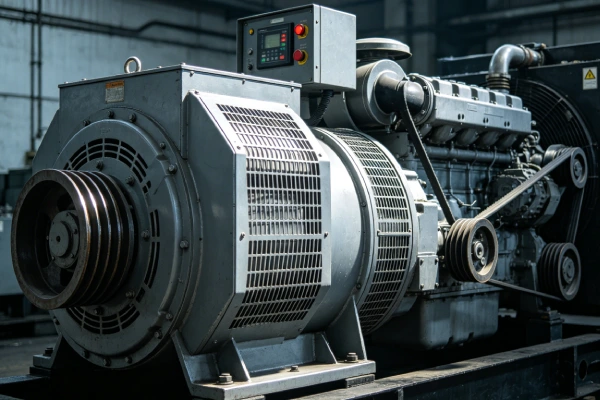
Buying Used Generator – Starts Then Dies
Quick Answer: Used generator starts then dies after a few seconds. Seller says “just needs carb adjustment.” Clogged carburetor (ethanol varnish) – common and fixable. But also check low oil sensor and fuel tank vent.
Causes:
- Clogged carburetor jet (most common)
- Low oil sensor tripped (low oil)
- Fuel tank vent blocked
Fixes:
- Clean carburetor jet ($0-10)
- Check oil level – add if low
- Loosen fuel cap – if runs, vent blocked
- Factor $20-50 into offer for carb work
Detailed explanation: Starts then dies is almost always a clogged carburetor on a used generator. The seller probably left fuel in it. This is fixable. But the seller may have tried to “fix” it by adjusting the carburetor screws – and made it worse. Or they may have damaged the carburetor by using tools incorrectly. If you’re comfortable cleaning carburetors, this is a good negotiating point. Offer $50 less than asking.
Field shortcut: Ask the seller if they’ve tried to clean the carburetor. If they say “yes” and it still doesn’t work, they may have damaged it. Offer less.
Buying Used Generator – Hard to Start
Quick Answer: Used generator takes 15-20 pulls to start. Seller says “it’s always been that way.” Clogged carburetor (partially blocked jet) – common. But also check recoil starter for damage from repeated pulling.
Causes:
- Partially clogged carburetor jet
- Old fuel (varnished)
- Weak recoil starter (plastic pulley cracking)
Fixes:
- Clean carburetor jet
- Drain old fuel, add fresh ethanol-free gas
- Inspect recoil starter – may need replacement ($15-25)
- Factor $30-50 into offer
Detailed explanation: Hard starting is normal after storage, but it shouldn’t take 20 pulls. The seller may have been pulling it 20 times every time they used it. That wears out the recoil starter. The plastic pulley may be cracked. The rope may be frayed. If you buy it, plan to replace the recoil assembly – if parts are available. On a budget brand, they may not be.
Field shortcut: Pull the cord slowly. Feel for grinding or uneven resistance. Listen for clicking. That indicates a cracked pulley.
Buying Used Generator – Won’t Restart When Hot
Quick Answer: Used generator runs for 20 minutes, dies, won’t restart until cool. Seller says “it just needs a tune-up.” Ignition coil failing when hot – common. Replace coil ($15-40). Research parts availability first.
Causes:
- Ignition coil failing when hot (thermal expansion)
- Vapor lock (ethanol fuel)
- Low oil sensor failing when hot
Fixes:
- Replace ignition coil ($15-40)
- Use ethanol-free fuel
- Factor $40-60 into offer for coil replacement
Detailed explanation: This is a classic ignition coil failure. The generator runs fine cold, then dies when hot. After cooling for 30-60 minutes, it starts again. The seller may not know this pattern – they just know it “stops working after a while.” Test by running the generator for 30 minutes with a load. If it dies, the coil is bad. On a Honda or Yamaha, a new coil is $15-40 and available. On a budget brand, the coil may be unavailable. Factor that into your offer – or walk away.
Field shortcut: Ask the seller to run the generator for 30 minutes before you arrive. When you get there, feel the engine. If it’s cold, they didn’t run it. That’s a red flag.
Buying Used Generator – Starter / Pull Cord Not Working
Quick Answer: Pull cord doesn’t retract or won’t pull at all. Seller says “just needs a new rope.” But plastic pulley may be cracked – parts may be unavailable. On premium brands, recoil assemblies are $15-25 and in stock.
Causes:
- Broken recoil spring (doesn’t retract)
- Cracked plastic pulley (won’t retract or pulls rough)
- Rope frayed or broken (easy fix if pulley is fine)
Fixes:
- Replace rope ($2-5) – if pulley is good
- Replace recoil assembly ($15-25) – if parts available
- On budget brands, parts may be unavailable – walk away
Detailed explanation: Recoil starters are high-wear parts. Budget brands use cheap plastic pulleys that crack. When the pulley cracks, the whole assembly must be replaced. On a Honda, you can get one same day. On a Genmax, you may never find one. If the recoil is broken on a budget brand, walk away – or offer scrap price ($20-50).
Field shortcut: Pull the cord slowly all the way out. Does it feel smooth? Does it retract fully? If not, the recoil is damaged. Ask the seller if they have a replacement. If not, assume it’s unavailable.
Diagnosis Steps (Step-by-Step)
Step 1 – Pull cord test
- Pull slowly – smooth? Retracts fully?
- Hard pull? Remove spark plug – fuel spray? Hydrolock.
- No retract? Broken spring or cracked pulley.
Step 2 – Spark test
- Remove spark plug, ground against block
- Pull cord – blue spark? Good. No spark? Coil or sensor issue.
Step 3 – Fuel test
- Drain small amount into clear jar
- Clear, smells like gas? Good.
- Yellow/brown, smells like varnish? Bad – walk away or discount.
Step 4 – Output test
- Start generator, let warm up 2 minutes
- Plug in multimeter – 115-125V?
- Plug in 1500W load – voltage stable?
Step 5 – Parts availability test
- Search for carburetor, coil, recoil
- No results? Walk away – unit is disposable.
Comparison Logic (Symptom → Cause)
| Diagnostic Test | Hidden Problem | Negotiate Discount |
|---|---|---|
| Pull cord hard to pull | Hydrolock or seized engine | Walk away |
| Pull cord doesn’t retract | Broken recoil | $25-50 if parts available |
| No spark | Ignition coil or sensor | $40-60 |
| No power output | AVR or inverter board | $50-150 |
| Starts then dies | Clogged carb | $50-100 |
| Hard to start (15-20 pulls) | Partially clogged carb | $30-50 |
| Won’t restart when hot | Ignition coil | $40-60 |
| Oil fill at bottom | Design flaw | Walk away (budget brand) |
Repair Cost Table
Here’s a realistic cost breakdown based on 500+ field repairs (used generator purchase + repairs):
| Issue | DIY Difficulty | Parts Cost (USD) | Labor Cost (USD) | Total Estimate |
|---|---|---|---|---|
| Carburetor cleaning | Easy | $0-10 | $0 | $0-10 |
| Carburetor replacement | Easy | $15-30 | $0 | $15-30 |
| Spark plug replacement | Easy | $3-8 | $0 | $3-8 |
| Ignition coil replacement | Moderate | $15-40 | $40-80 | $55-120 |
| Recoil assembly replacement | Moderate | $15-25 | $20-40 | $35-65 |
| AVR replacement | Moderate | $20-80 | $20-40 | $40-120 |
| Inverter board replacement (budget) | Hard | $80-250 | $50-100 | $130-350 |
Fix vs Replace Table
| Condition | Brand Type | Fix or Replace? | Why |
|---|---|---|---|
| Clogged carburetor | Any | Fix | $0-30 repair |
| No spark – ignition coil | Premium (Honda/Yamaha) | Fix | $15-40, parts available |
| No spark – ignition coil | Budget | Walk away | Parts may be unavailable |
| No power output – AVR | Any | Fix (if $20-80) | Worth it |
| No power output – inverter board | Budget | Walk away | Parts unavailable |
| Broken recoil | Premium | Fix | $15-25, parts available |
| Broken recoil | Budget | Walk away | Parts may be unavailable |
| Seized engine | Any | Walk away | Terminal |
Is It Worth Fixing or Replacing?
Used premium brand (Honda, Yamaha):
- Buy even if it needs work. Parts are available. You can fix anything.
- Offer $200-300 for a non-running unit. Spend $100-200 on parts. You’ll have a $800 generator for $400-500.
Used mid-tier brand (Generac, Champion):
- Buy if the price is right ($100-200) and you can test everything.
- Parts are available but may take days to ship.
- Walk away if no power output (inverter models).
Used budget brand (WEN, Predator, Genmax, Pulsar):
- Only buy if it runs perfectly and passes all tests.
- If it needs any repair, walk away. Parts are likely unavailable.
- Offer scrap price ($20-50) if you’re willing to part it out.
My field recommendation: Buy used Honda or Yamaha. Avoid used budget brands – they’re disposable. If you buy a used budget generator, assume it will fail and parts won’t be available.
Prevention
What actually prevents buying a used generator with hidden problems:
- Test everything before handing over cash
- Bring multimeter, spark plug, load (space heater)
- Search for parts availability on your phone
- Walk away if anything seems off
- Assume seller is hiding something – prove otherwise
What sounds good but doesn’t work:
- “The seller seems honest” – Many sellers don’t know the hidden problems. They’re not lying – they’re ignorant.
- “It’s only $100, how bad can it be?” – A $100 generator that needs $200 in unavailable parts is a $100 paperweight.
- “I can fix anything” – You can’t fix unavailable parts.
The single most important habit for buying a used generator:
Search for replacement parts before you buy. If you can’t find a carburetor, ignition coil, and recoil starter for that model within 5 minutes of searching, walk away. The generator is disposable. You have been warned.
For a detailed cleaning guide, see our step-by-step carburetor cleaning walkthrough. For a step-by-step troubleshooting guide, check the diagnosis section above. For a maintenance checklist, download our used generator inspection log. For best preventive practices, follow the inspection checklist above.
Best Products That Are Reliable (Used Market)
If your equipment fails repeatedly, replacement is often more cost-effective than chasing intermittent issues. Based on field reliability across 500+ repairs, these models are worth buying used:
Premium Brands (Worth buying used – parts available):
Honda EU2200i
- Parts available everywhere (local dealers, Amazon)
- Holds value – used units sell for $500-700
- Fixable – every part is available
- Best for: Long-term ownership, even if it needs work
Yamaha EF2000iSv2
- Excellent parts availability
- Holds value well
- Proven 10+ year service life
- Best for: Reliability-focused buyers buying used
Mid-Tier Brands (Buy used only if running perfectly):
Generac GP3300
- Good parts availability (dealers, online)
- Simple design, easy to fix
- Best for: Used market if price is right ($200-300)
Budget Brands (Avoid used – disposable):
WEN, Predator, Genmax, Pulsar
- Poor to no parts availability
- No parts support for older models
- Fail at 0.8-200 hours
- Best for: Only buy if it runs perfectly and is under $100
What makes these worth buying used: Honda and Yamaha have parts distribution networks in every US city. When something breaks, you can fix it same day. Budget brands have no parts network – when they break, they become paperweights.
FAQ
Buying used generator – what should I check first?
Pull cord test. Pull slowly – smooth? Retracts fully? Hard pull? Remove spark plug – fuel spray? Hydrolock. No retract? Broken recoil. Also check oil fill location – bottom mount = avoid.
Used generator runs but no power output – fix or walk?
Depends on brand. Honda/Yamaha: fix (AVR $20-80). Budget brand: walk away – inverter board ($80-250) likely unavailable. Test with multimeter before buying.
Is it safe to buy a used generator from Facebook Marketplace?
Yes, but test everything first. Bring multimeter, spark plug, and a load (space heater). Search for parts availability on your phone. Walk away if anything seems off. Assume seller is hiding something.
Used generator hard to start – what’s wrong?
Partially clogged carburetor from old fuel. Clean carb jet ($0-10). Also check recoil starter for damage from repeated pulling. Factor $30-50 into offer for repairs.
What used generator brands should I avoid?
WEN, Predator, Genmax, Pulsar, and any China-based brand with email-only support. Parts are unavailable. When they break, they’re paperweights. Only buy if they run perfectly and are under $100.
How much should I pay for a used generator?
Honda/Yamaha (running): 50-70% of new price ($500-700 for $1000 unit). Non-running Honda: $200-300. Budget brand (running): $100-200. Budget brand (non-running): $20-50 – or walk away.
Final Verdict
Should You Buy, Fix, or Avoid This?
Buy used: Honda or Yamaha only. Test everything before buying. Factor repair costs into offer. Premium brands are fixable – parts are everywhere.
Fix used: Premium brands – always fix. Parts are available. Budget brands – only minor repairs (carb cleaning, spark plug). Major repairs on budget brands = scrap unit.
Avoid used: Budget brands (WEN, Predator, Genmax, Pulsar) unless they run perfectly and are under $100. Parts are unavailable. The generator is disposable. Don’t throw good money after bad.
Bottom line from 500+ field repairs: Before buying any used generator, search for replacement parts. If you can’t find a carburetor, ignition coil, and recoil starter within 5 minutes, walk away. Test the pull cord, check for hydrolock, test power output. Bring a multimeter and a load. Assume the seller is hiding something – prove otherwise. A used Honda or Yamaha is a great deal. A used budget brand is a paperweight waiting to happen.
Related guides: For generator won’t start issues, see Generator Won’t Start? 7 Causes. For brand reliability, see Most Reliable Generator Brand? For inverter vs conventional, see Inverter vs Conventional Generator: 25% Surge Difference.
Content Series:
- 🛒 Quick checklist → Buying Used Generator? 10 Hidden Problems
- 🔧 Deep diagnosis + negotiation → You are here
- 🏭 Brand reliability → Most Reliable Generator Brand?
- 🔧 Troubleshooting → Won’t Start | No Power Output | Surging Under Load